
Living with dementia can change how a person communicates, manages daily routines, responds to surroundings, and experiences time. Assisted living can provide structure and supervision, but families and staff still play an important role in helping the person feel safe, respected, and understood.
Good dementia support is not limited to memory care tasks. It also includes preserving familiar habits, encouraging appropriate independence, recognizing health changes, and responding calmly when confusion or distress appears.
What does effective dementia support look like?
Effective support is person-centered. This means care is shaped around the resident’s history, abilities, preferences, health needs, and usual routines rather than treating dementia as the person’s entire identity.
A useful care profile may include:
- Preferred name and form of address
- Past occupations, hobbies, faith practices, and family traditions
- Favorite foods, music, television programs, or activities
- Typical sleep and meal patterns
- Ways the person expresses pain, fear, hunger, or fatigue
- Known triggers for agitation or withdrawal
- Abilities the person can still use independently
This information helps staff respond to the individual rather than relying only on general dementia routines. A resident who once gardened may enjoy sorting seeds or caring for indoor plants. Someone who worked with tools may appreciate folding towels, organizing objects, or participating in simple maintenance-related activities.
How should family members communicate with a person who has dementia?
Use short, calm statements and allow extra time for a response. A person with dementia may understand more than they can express, especially when conversation moves quickly or several people are speaking.
Helpful approaches include:
- Make eye contact and use the person’s name.
- Ask one question at a time.
- Offer simple choices, such as “Would you like tea or water?”
- Speak at a normal volume and avoid sounding like a child.
- Give the person time to answer without finishing every sentence.
- Use gestures, pictures, or demonstrations when words are difficult.
- Focus on the emotion behind the statement, not only its factual accuracy.
Arguments about dates, past events, or mistaken beliefs usually increase distress. If a resident says, “I need to go home,” correcting the statement repeatedly may not help. A calmer response might acknowledge the feeling: “You miss home. Let’s sit together for a few minutes and have some tea.”
Hearing loss, poor vision, dental problems, fatigue, and medication side effects can make communication harder. These concerns should be reported because they may appear to be worsening dementia when the underlying issue is treatable.
How can assisted living routines reduce confusion?
Predictable routines help reduce the number of decisions a resident must make. Meals, bathing, medication administration, activities, and bedtime should follow a reasonably consistent pattern whenever possible.
Changes should be introduced gradually. Moving furniture, changing dining locations, switching caregivers, or altering a familiar schedule may cause confusion even when the change seems minor to others.
Helpful environmental features may include:
- Clear signs or pictures on bathroom and bedroom doors
- Good lighting, especially in hallways and bathrooms
- Reduced glare and unnecessary background noise
- Familiar personal belongings
- Easily visible clocks and calendars
- Safe walking paths without loose rugs or clutter
- Clothing and supplies arranged in a predictable order
Seasonal conditions can also affect daily comfort. In South Williamsport, cold weather, shorter winter daylight, rain, and icy outdoor surfaces may limit walking or make outings more stressful. During warmer months, dehydration and heat exposure deserve attention. Indoor walking, music, simple exercise, and seated activities can help maintain movement when outdoor conditions are unsafe.
What should families do when a resident becomes agitated?
Agitation is often a sign of an unmet need rather than deliberate misbehavior. The person may be in pain, constipated, hungry, tired, overheated, frightened, overstimulated, or unable to explain a physical problem.
When distress appears:
1. Lower the noise and reduce the number of people nearby.
2. Use a calm voice and relaxed body language.
3. Check for pain, toileting needs, hunger, thirst, temperature, or illness.
4. Avoid crowding, arguing, or demanding immediate cooperation.
5. Offer reassurance and redirect attention to a familiar activity.
6. Record what happened, including the time, setting, preceding events, and what helped.
A sudden change in behavior should not automatically be blamed on dementia. New confusion, unusual sleepiness, weakness, fever, falls, appetite changes, or hallucinations may indicate infection, medication problems, dehydration, or another medical concern. Prompt evaluation is appropriate when a change is sudden, severe, or accompanied by other symptoms.
How can families support independence without creating unnecessary risk?

Independence should be preserved wherever it is reasonably safe. Doing everything for a resident may reduce confidence and physical ability, while expecting tasks beyond the person’s current capacity can cause frustration.
Break activities into small steps. Instead of saying, “Get dressed,” try offering one item at a time. A resident may still be able to choose between two shirts, brush their hair, fold clothing, or help set a table even if full dressing or meal preparation is no longer safe.
Safety planning may involve supervision for:
- Walking near exits or unfamiliar areas
- Bathing and transfers
- Medication use
- Cooking or hot liquids
- Use of mobility devices
- Nighttime wandering
- Outdoor activity during icy or very hot weather
The goal is not to eliminate every risk. It is to balance safety with dignity, movement, choice, and meaningful participation.
What should families ask an assisted living residence?
Families should ask how dementia-related needs are assessed, documented, and communicated. In Pennsylvania, assisted living residences are licensed residential settings with requirements related to care, supervision, staffing, training, and resident safety. Families can ask to review the residence’s approach to dementia support and how changes in condition are handled.
Useful questions include:
- How are personal routines and preferences recorded?
- What dementia-specific training do direct-care staff receive?
- How are falls, wandering, medication concerns, and behavioral changes documented?
- How are families notified about significant changes?
- What activities are adapted for different cognitive and physical abilities?
- How does the residence respond to nighttime confusion?
- What happens if the resident’s needs become more complex?
- How are emergency visits and hospital returns managed?
Families should also learn which staff members coordinate care and how to update the resident’s medication list, advance directives, emergency contacts, and medical history.
How can visits remain meaningful?
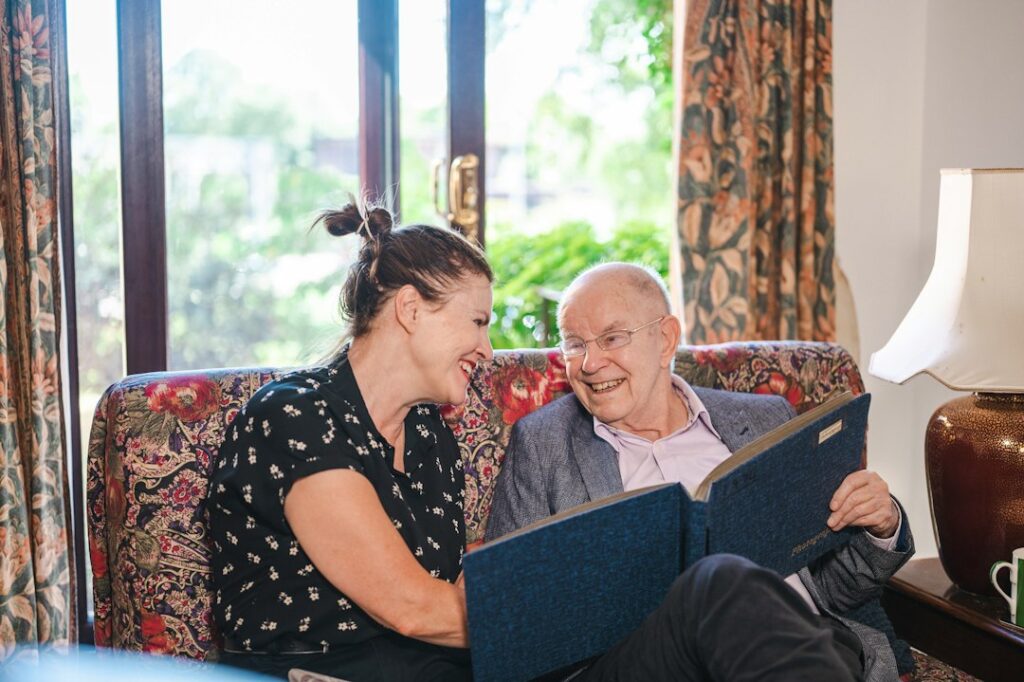
Visits do not need to depend on long conversations. A person with dementia may benefit more from a familiar song, a short walk, looking through photographs, folding towels, sharing a snack, or sitting quietly together.
Keep visits flexible. The resident may be more alert in the morning, after a meal, or at a particular time of day. If conversation becomes difficult, focus on comfort and connection rather than testing memory.
Family members should share observations with staff, including changes in mood, sleep, appetite, mobility, continence, or ability to complete familiar tasks. Consistent communication can help identify patterns early and support a more individualized care plan.
Supporting a senior with dementia requires patience, observation, and coordination. The most helpful approach protects safety while continuing to recognize the person’s preferences, history, relationships, and ability to participate in everyday life.
